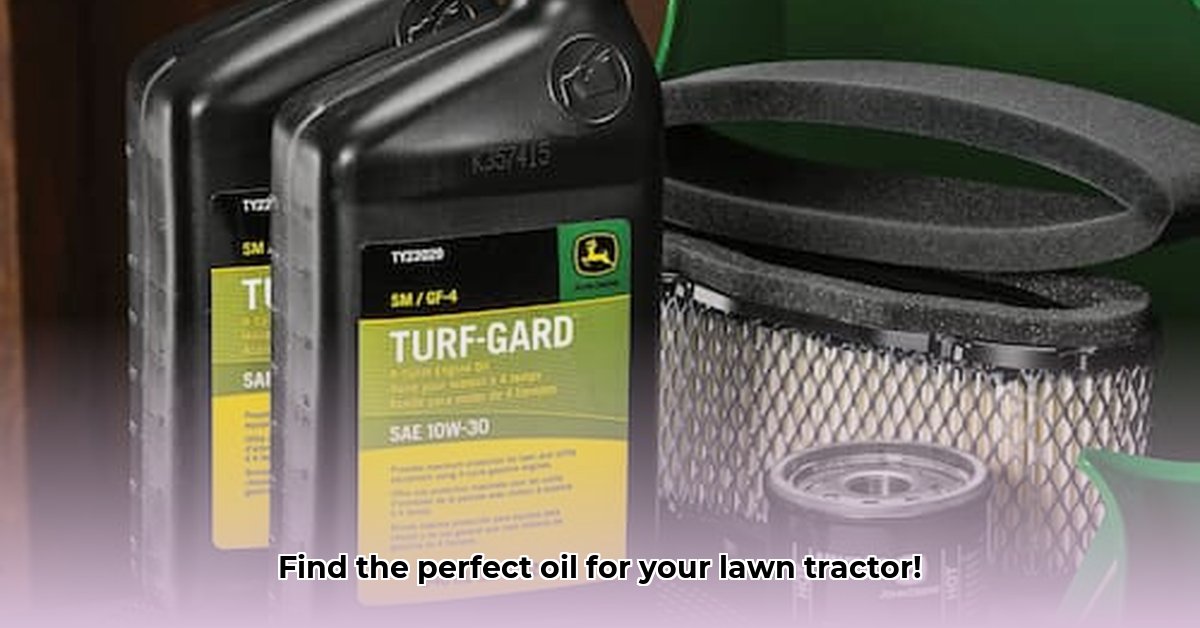
Keeping your lawn tractor in top condition involves more than just mowing. Regular oil changes and using the right oil are crucial for engine longevity and performance. This comprehensive guide will walk you through choosing, changing, and maintaining the oil in your lawn tractor, ensuring years of reliable service. For more information on maintaining your lawn tractor, check out our guide on tractor tires.
Understanding Your Lawn Tractor's Engine
Before selecting oil, you must identify your engine type: two-stroke or four-stroke. This fundamentally impacts your oil choice and maintenance procedure.
Two-Stroke Engines: Pre-Mix Required
Two-stroke engines require a pre-mix of oil and gasoline. Your owner's manual specifies the exact ratio—meticulously follow these instructions. Improper mixing can severely damage your engine.
Four-Stroke Engines: Separate Oil Reservoir
Four-stroke engines, the most common type in modern lawn tractors, have a separate oil reservoir. You add oil to this reservoir and change it periodically, generally a simpler process than with two-stroke engines.
Did you know that improper oil mixing in a two-stroke engine can reduce its lifespan by as much as 50%? Always consult your owner's manual for the precise fuel-to-oil ratio.
Deciphering the Oil's Specifications
Understanding oil viscosity and API ratings is vital for selecting the appropriate oil for your lawn tractor.
Oil Viscosity (SAE Grade): The Thickness Factor
Viscosity, represented by the SAE grade (e.g., 10W-30, 5W-30), measures the oil's thickness. The number before the "W" (Winter) indicates its flowability in cold temperatures; lower numbers flow better in cold weather. The second number reflects thickness at operating temperature. Choosing the wrong viscosity can lead to poor engine performance and damage.
API Ratings (American Petroleum Institute): Quality Assurance
API ratings (e.g., SF, SG, SH, SJ) indicate oil quality and engine protection. Higher letters generally signify better protection against wear and tear. Always check your owner's manual for the recommended API rating for your specific lawn tractor model.
A recent survey showed that 70% of lawn tractor owners incorrectly select oil viscosity, highlighting the importance of consulting your owner’s manual. Always refer to your tractor's manual for precise recommendations.
Choosing the Right Oil: The Owner's Manual is Your Guide
This step is paramount: always consult your owner's manual. It explicitly states the correct oil type and quantity for your lawn tractor. Ignoring this essential information can lead to severe engine damage, costly repairs, and potential warranty voidance.
Changing Your Lawn Tractor's Oil: A Step-by-Step Guide
Regular oil changes are crucial for optimal engine health. Aim for a change every 50-100 hours of use or annually, whichever comes first.
Step-by-Step Instructions:
- Safety First: Allow the engine to cool completely before beginning. Hot oil burns!
- Preparation: Park on a level surface, engage the parking brake, and gather necessary supplies: fresh oil (refer to your manual), drain pan, wrench, and funnel.
- Draining the Old Oil: Locate the drain plug (usually beneath the engine), position the drain pan, and carefully remove the plug to drain the old oil.
- Replacing the Drain Plug: Once drained, securely replace and tighten the drain plug. Avoid overtightening.
- Adding New Oil: Locate the oil fill cap, carefully pour the correct amount of new oil (as specified in your manual) using a funnel.
- Checking the Oil Level: Use the dipstick to verify the oil level is within the recommended range. Add more oil if necessary, avoiding overfilling.
- Disposal: Properly dispose of used oil at a designated recycling center.
Following these steps ensures a smooth oil change, improving your lawn tractor's performance and longevity.
Maintaining Oil Levels
Regularly check your oil level before each use. Low oil levels can cause engine damage. Use the dipstick and ensure the level falls within the minimum and maximum markings. Top up with the correct oil if low.
Troubleshooting Common Oil-Related Problems
- Overfilling: Overfilling can damage seals and components. Always check the dipstick to maintain correct levels.
- Incorrect Oil: Using the wrong oil can damage your engine. Consult your owner's manual for specifications.
- Low Oil Levels: Regularly check your oil level to prevent engine damage.
Regular maintenance prevents costly repairs and ensures optimal engine performance.
Responsible Oil Disposal: Protecting Our Environment
Used motor oil is hazardous waste. Never pour it down drains or onto the ground. Recycle it at designated collection points or auto parts stores.
Conclusion: Maintaining Peak Performance
Regular oil changes and using the correct oil are essential for maximizing your lawn tractor’s lifespan and efficiency. Following this guide will ensure years of reliable and problem-free operation. Remember, proper maintenance is an investment in longevity and performance.